
Why Is Reheating Seafood Risky?
Seafood spoils faster than meat because its natural enzymes and bacteria remain active after cooking. The main danger is leaving cooked fish or shellfish at room temperature for more than two hours, or one hour if the room is above 90°F (32°C). In this range, between 40°F and 140°F (4°C and 60°C), bacteria multiply quickly enough to cause food poisoning even if the food looks and smells fine.
Certain fish, especially tuna, mackerel, mahi-mahi and sardines, carry an extra risk. When these fish are not chilled fast enough after cooking, bacteria on the surface convert a natural compound in the flesh into histamine. Reheating kills the bacteria but does not destroy the histamine that has already formed. Eating fish with high histamine levels can trigger a reaction that mimics an allergic response: skin flushing, headache and nausea. The FDA warns that histamine is heat-stable, so no amount of reheating makes affected fish safe.
Which Seafood Is Safe to Reheat?

Thick, dense fish fillets and shellfish with a firm texture generally reheat well because they retain moisture and do not fall apart under gentle heat. Salmon, cod, halibut and swordfish steaks are good candidates, as are shrimp, scallops, crab legs and lobster meat. The key is that the seafood was cooked properly the first time, cooled quickly and stored in the refrigerator within two hours.
Some types of seafood are better eaten cold or discarded rather than reheated. Delicate white fish like sole, flounder and tilapia tend to dry out and turn rubbery. Fried seafood loses its crisp coating and becomes soggy, and the oil can take on an unpleasant taste. Any cooked seafood left at room temperature longer than two hours, or one hour if the temperature is above 90°F, should be thrown away regardless of type.
- Salmon and trout fillets hold their shape and moisture well during gentle reheating.
- Cod and halibut steaks are dense enough to reheat without becoming mushy.
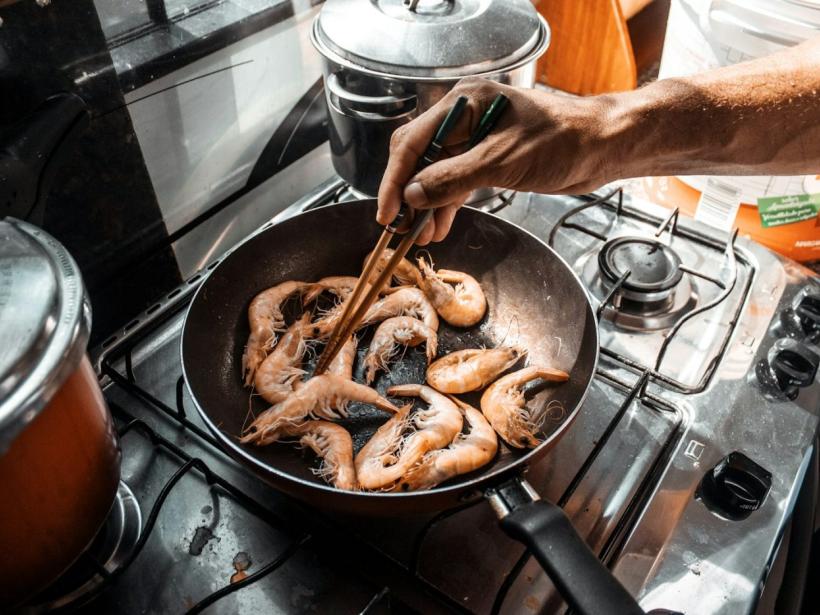
- Shrimp and prawns reheat quickly and stay tender when warmed in a pan with a splash of water.
- Scallops retain their texture if reheated on low heat and not overcooked a second time.
- Crab legs and lobster meat reheat well in steam or a covered skillet with a little butter.
- Mussels, clams and oysters in the shell are best eaten immediately and rarely reheat well because the meat shrinks and toughens.
How Should I Cool and Store Cooked Seafood?
Cooling cooked seafood quickly is the most important step for safety. Bacteria multiply fastest between 40°F and 140°F, so you want to push the food through that danger zone as fast as possible. Transfer the seafood to a shallow, wide container instead of leaving it in a deep pot. A thin layer of shrimp étouffée or a single layer of fish fillets in a baking dish will shed heat much faster than a dense mound in a tall container.
Refrigerate the seafood within two hours of cooking. On a hot New Orleans afternoon, when the kitchen climbs above 90°F, cut that window to one hour. Set your refrigerator to hold a steady 40°F or below. Once the container is cool to the touch, press a lid on snugly or wrap it tightly. Use the cooked seafood within one to two days. Shellfish like shrimp and crawfish tend to hold up for the full two days, while delicate flaky fish is best eaten the next day.
What Is the Safest Way to Reheat Seafood?

The safest way to reheat seafood is any method that brings the internal temperature to 165°F (74°C) without overcooking the delicate flesh. A food thermometer is your best tool here. The goal is to heat the seafood quickly and evenly, so it spends as little time as possible in the bacterial danger zone between 40°F and 140°F.
Three methods work reliably well. In the oven, place the seafood in a covered dish with a splash of water, broth, or lemon juice, and warm it at 275°F to 300°F until it reaches the safe temperature. On the stovetop, use a skillet with a tight-fitting lid over low heat and add a tablespoon of liquid to create steam. In the microwave, arrange the seafood in a single layer, cover it with a damp paper towel, and use short 30-second bursts, checking the temperature after each burst to avoid rubbery texture.
How Can I Tell If Reheated Seafood Has Gone Bad?

Trust your senses. If the reheated seafood shows any of these three clear signs, discard it immediately. The risk of food poisoning is not worth a second guess.
- A sour, ammonia-like or overly fishy smell. Fresh cooked seafood has a mild, briny scent. A sharp, chemical odor signals spoilage bacteria have started breaking down the proteins.
- A slimy or tacky texture on the surface. Run a fork over the fish or shrimp. If it feels slippery or leaves a sticky residue, bacteria are multiplying. The flesh should be firm and moist, never gelatinous.
- An off or bitter taste. Take a tiny bite. If you detect any sourness, bitterness or a metallic tang, spit it out and throw the rest away. Do not try to mask the flavor with sauce.
- A dull or grayish color change. Shrimp and white fish that have turned from translucent white to an opaque, milky gray or yellow are past their prime.
If any single sign appears, the entire batch is unsafe. Do not taste food you already suspect from the smell or texture. Wrap it securely and take it out of the kitchen to avoid contaminating surfaces.
Can I Reheat Seafood More Than Once?
Seafood should be reheated only once. Every time you cool cooked seafood and warm it back up, it spends extra time in the temperature danger zone between 40°F and 140°F, where bacteria multiply fastest. Food safety experts agree that each reheating cycle raises the risk of foodborne illness, especially with protein-rich foods like fish and shellfish.
The texture suffers just as much as the safety margin. A second reheating turns flaky white fish into dry, stringy shreds and makes shrimp rubbery. Oily fish like salmon and mackerel develop a strong, stale odor that no sauce can hide. If you cooked more than you need, portion it out before refrigerating. Take out only what you will eat, reheat that portion once, and leave the rest cold for another meal.
Frequently asked questions
Is it safe to reheat shrimp?
Yes, shrimp can be safely reheated if it was refrigerated within two hours of cooking and stored at or below 40°F. Reheat it gently in a skillet with a little butter or oil over low heat, or in the microwave in short bursts, until it reaches 165°F inside. Overheating will make it rubbery, so keep the heat moderate.
Can I reheat seafood that was left out overnight?
No. Cooked seafood left at room temperature for more than two hours should be discarded. Bacteria multiply rapidly between 40°F and 140°F, and some toxins produced by bacteria are not destroyed by reheating. The risk of food poisoning is not worth it.
Does reheating kill all bacteria in seafood?
Reheating to 165°F kills most live bacteria, but it does not destroy toxins that bacteria may have already produced while the food was cooling too slowly. That is why rapid cooling and proper storage are just as important as the reheating step itself.
What is the best way to reheat fried fish without making it soggy?
Fried fish is difficult to reheat well. An oven or air fryer preheated to 350°F gives the best chance of crisping the coating. Place the fish on a wire rack over a baking sheet and heat for about 8 to 10 minutes, checking that the inside reaches 165°F. The texture will never match freshly fried fish, but this method keeps it from turning soft.
Photo: Kawê Rodrigues, Unsplash (Unsplash License)