
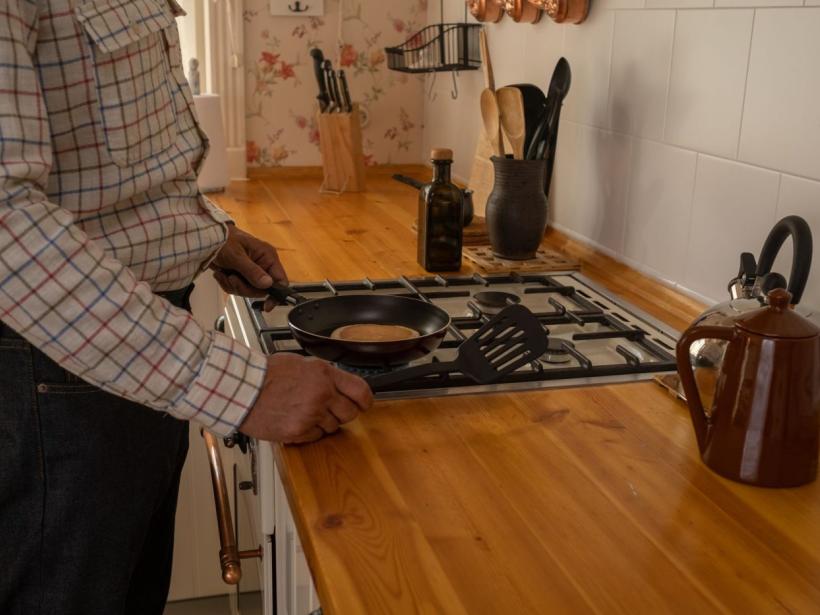
What is the best crepe batter consistency?
The batter should be as thin as heavy cream, much looser than American pancake batter. It needs to coat the back of a spoon in a light, even layer that drips off in a smooth ribbon. A good starting ratio is 1 cup of all-purpose flour to 1 1/4 cups of whole milk, plus 2 large eggs and 2 tablespoons of melted butter.
Whisk the flour and eggs first with just a splash of milk to form a smooth paste, then gradually stream in the remaining milk while whisking. This method prevents lumps and gives you a silky texture. If the batter seems too thick, add milk a tablespoon at a time until it flows easily off the whisk.
Rest the batter at room temperature for at least 30 minutes, or cover and refrigerate for up to 24 hours. The flour absorbs the liquid during this time, which relaxes the gluten and yields a tender crepe that does not spring back when you swirl it in the pan. Stir the batter gently before using, as the batter will settle.
How do you get the pan temperature right for crepes?

Heat a nonstick or well-seasoned carbon steel pan over medium heat for about 3 minutes before you start. A cool pan makes pale, rubbery crepes that stick; a hot pan scorches the butter and browns the batter before you can swirl it.
The quickest way to check is the water-drop test. Flick a few drops of water onto the hot pan. If the drops sit and slowly evaporate, the pan is too cold. If they shatter into lots of tiny beads that skitter across the surface, the pan is ready, roughly 375°F to 400°F. Wipe the pan dry, drop in a small pat of butter, and watch the visual cue: the butter should melt immediately and foam gently without turning brown or smoking.
Between crepes, lift the pan off the heat for a few seconds while you pour and swirl the next ladle of batter. If you notice the butter starting to darken or the crepes setting too fast at the edges, reduce the burner to medium-low. A steady rhythm matters more than a fixed dial. Trust your eyes and nose as you cook.
What is the easiest way to flip a crepe without tearing it?
Use a thin, flexible spatula and your fingertips, not a dramatic pan toss. Wait until the surface of the crepe looks matte and dry, and the edges curl slightly away from the pan. A shiny, wet crepe will tear every time.
Slide the spatula gently under the lifted edge and lift just enough to get your thumb and forefinger underneath. Pinch the edge firmly, then lift and turn the crepe over in one smooth motion. Guide the other side down into the pan with your free hand so it lands flat without folding onto itself.
- Cook the first side until the top is no longer glossy and the edges are visibly browned and crisp.
- Run a thin offset spatula all the way around the rim to release any stuck spots before you lift.
- Use your thumb and forefinger to grip the crepe, not the tips of your fingers, so you have a secure hold.
- Turn your wrist quickly and keep the crepe low to the pan so it does not stretch under its own weight.
- If the crepe folds on landing, use the spatula to smooth it flat before it sets.
What are the best sweet fillings for breakfast crepes?

A warm crepe needs a filling that complements its delicate texture, not one that makes it soggy. Spread the filling in a thin, even layer across the center, leaving a one-inch border. Fold the sides over, then roll or fold into quarters for a clean shape that holds its crisp edge.
These classic sweet combos come together in under a minute once your crepes are cooked. Keep the fillings at room temperature so they spread easily and do not cool the crepe on contact.
- Lemon and sugar: Squeeze fresh lemon juice over the crepe, then sprinkle with granulated sugar. The sugar dissolves slightly into the citrus, creating a bright, simple syrup right on the crepe.
- Nutella and banana: Spread a tablespoon of Nutella down the middle and top with thin banana slices. The hazelnut spread acts as a barrier, keeping the fruit from sliding out when you fold.
- Fresh berries and whipped cream: Spoon lightly sweetened whipped cream onto the crepe and scatter raspberries, blueberries, or sliced strawberries on top. Pat the berries dry with a paper towel first so their juice does not soak through.
- Cinnamon apple compote: Warm diced apples with butter, cinnamon, and a pinch of brown sugar until just tender. Let the compote cool for two minutes before spooning it in so the crepe stays firm.
- Honey and ricotta: Mix whole-milk ricotta with a drizzle of honey until smooth. Spread it across the crepe, add a second light drizzle of honey on top, and fold. The ricotta keeps the honey from running out the sides.
What are the best savory fillings for breakfast crepes?
A savory crepe makes breakfast more substantial. The key is to cook and warm each filling component before you assemble the crepe. A cold filling cools the crepe too fast and ruins the texture.
The crepe is a warm, tender wrapper. Fillings should be fully cooked, seasoned, and kept warm while you finish the crepes. These combinations work beautifully in the morning.
- Ham and Gruyère: place a slice of good ham and a generous pile of shredded Gruyère on the crepe while it is still in the pan. Fold it in half and let the residual heat melt the cheese for about 30 seconds before sliding it onto a plate.
- Sautéed mushrooms with herbs: cook sliced cremini mushrooms in butter with a pinch of salt, black pepper, and fresh thyme until they release their liquid and start to brown. Spoon them down the center of the crepe and fold the sides over.
- Smoked salmon with cream cheese: spread a thin layer of cream cheese over the warm crepe, lay on slices of smoked salmon, and add a few capers and a squeeze of lemon. The cream cheese softens instantly without any extra cooking.
- Spinach and feta: wilt fresh spinach in a hot pan with a little olive oil, then drain it well so the crepe does not get soggy. Crumble feta over the spinach, fold the crepe, and let it sit in the warm pan for a moment to heat the cheese through.
- Scrambled egg and chive: make soft scrambled eggs and season them with salt and minced chives. Spoon the eggs onto the crepe, fold it into a square or a roll, and serve right away while the eggs are still creamy.
How do you keep crepes warm for a crowd?

Set your oven to the lowest possible temperature, usually around 170°F to 200°F. Stack the cooked crepes on an oven-safe plate and cover the pile loosely with a sheet of aluminum foil. The foil traps enough steam to keep the crepes from drying out, but the loose wrap prevents them from turning soggy.
Skip the microwave. It heats unevenly and turns crepes rubbery in seconds. If you need to hold them longer than 20 minutes, place a second plate upside down over the stack instead of foil to create a gentle seal without any metallic taste.
Can you make crepe batter the night before?
Yes, and an overnight rest in the fridge actually improves the texture. The flour hydrates fully and the gluten relaxes, so the crepes turn out tender and tear less when you flip them.
Pour the blended batter into a bowl or a lidded pitcher, press plastic wrap directly onto the surface to stop a skin from forming, and refrigerate for up to 24 hours. Before you start cooking, take it out and whisk it gently. The batter will have thickened and separated a little, so add a splash of milk or water, a tablespoon at a time, until it flows like heavy cream again.
Frequently asked questions
Why do my crepes turn out rubbery?
Overmixing develops too much gluten and makes crepes tough. Stir just until the flour disappears, even if a few small lumps remain. They will hydrate and soften during the rest.
Do I need a special crepe pan?
You don't need a special pan. A flat nonstick skillet or a well-seasoned carbon steel pan works beautifully. The key is a smooth surface and even heat distribution.
How do I store leftover crepes?
Stack cooled crepes with a small piece of parchment between each one, then wrap the stack tightly in plastic wrap. They keep in the fridge for three days or in the freezer for up to a month.
Photo: Ron Lach, Pexels (Pexels License)