
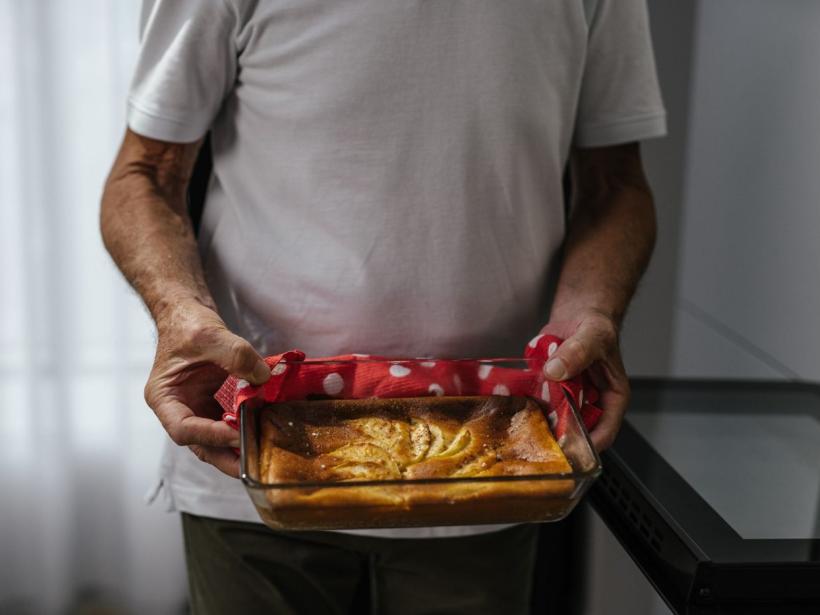
What material is best for dessert baking pans?
The right material depends on the dessert you are making. Aluminum heats up fast and cools down quickly, so it gives you an even, golden crust on brownies and sheet cakes. Nonstick carbon steel is the everyday workhorse for layer cakes and muffins because it releases batter with almost no effort, though the coating can wear down over time with metal utensils.
Glass retains heat much longer than metal, which makes it perfect for fruit cobblers and custard-based desserts that benefit from a slow, gentle bake. Silicone stays flexible and naturally nonstick, so intricate molded desserts and mini cheesecakes pop out without cracking.
- Aluminum: excellent heat conductor, no nonstick coating. Best for brownies, sheet cakes and anything that needs a crisp edge.
- Nonstick carbon steel: moderate heat conduction with an easy-release surface. Best for layer cakes, muffins and quick breads.
- Glass: slow to heat, holds temperature a long time. Best for cobblers, crisps, bread pudding and custard bakes.
- Silicone: poor heat conduction, naturally nonstick and flexible. Best for molded mousses, mini cheesecakes and delicate frozen desserts.
How does pan size change baking time and texture?

Using an 8-inch pan instead of a 9-inch pan gives you a noticeably thicker batter layer because the same volume spreads over less surface area. That extra thickness means the center takes longer to set, so you need to lower the oven temperature by 25°F and add 5 to 10 minutes to the bake time. When you go the other way and pour a recipe meant for a 9-inch pan into a 10-inch pan, the batter spreads thinner, bakes faster and can dry out if you do not pull it early.
If you swap pan sizes and the batter depth changes by more than half an inch, adjust the temperature, not just the timer. Dense batters like brownie and cheesecake mixes are less forgiving than airy sponge batters. For a visual cue, start checking for doneness about two-thirds of the way through the original bake time when you move to a larger pan. The toothpick test works the same way, a clean pick or a few moist crumbs means the center has caught up with the edges.
Which pan shape works for brownies, cheesecakes and tarts?
Brownies need a square metal pan with straight sides, typically 8×8 or 9×9 inches. The straight walls give you clean edges on every piece and the metal conducts heat evenly so the center sets without the corners burning. Glass or ceramic squares work too but you will need to lower the oven temperature by 25°F and add a few extra minutes to the bake time.
Cheesecakes rely on a springform pan, a round pan with a latch that opens the sides and lifts them away from the base. That removable collar is the only way to get a dense, creamy cheesecake out of the pan without cracking it. Most recipes call for a 9-inch springform. Wrap the outside in foil if you are using a water bath so no moisture seeps through the seam.
Tarts and quiches demand a shallow round pan with fluted edges and a removable bottom. The bottom lifts out so you can slide the whole tart onto a serving plate without disturbing the delicate pastry shell. Standard sizes run from 9 to 11 inches. The fluted sides are not just decorative, they support a shorter crust wall that bakes crisp and holds the filling neatly.
- Brownies: square metal pan, 8×8 or 9×9 inches, for even corners and a fudgy center.
- Cheesecake: 9-inch round springform pan with a removable collar to release the cake intact.
- Fruit tart: 9- or 10-inch round tart pan with fluted edges and a lift-out bottom.
- Sheet cake: 9×13-inch rectangular metal pan for thin layers that cool quickly and feed a crowd.
- Individual tarts: mini tart pans with removable bottoms, usually 4 inches wide, for single servings.
- Bar cookies: square pan, same as brownies, but line it with parchment slings so you can lift the whole slab out before slicing.
Dark pans vs light pans: does color really matter?

A pan’s color changes how heat moves through your batter. Dark metal absorbs heat faster and holds onto it longer, so the edges and bottom of your dessert brown more quickly. That's an advantage for recipes that want a crisp, deeply colored crust, but it can over-brown a delicate vanilla cake or a pale cheesecake before the center is fully set.
Light aluminum pans reflect some heat, which gives you a slower, more even bake. They are the safer pick for tender cakes, custard-based desserts and anything you want to keep light gold on the outside. If your recipe calls for a pale finish or a long, gentle bake, a light pan is the one to reach for.
When you only have dark pans, lower the oven temperature by 25 degrees and start checking for doneness a few minutes earlier than the recipe says. The dessert will still bake through without the outsides racing ahead of the middle.
What is the difference between a cake pan and a pie dish?

A cake pan has straight vertical sides, while a pie dish has sloped sides that angle outward. That slope changes how heat reaches the dessert, how the crust sets, and how you remove each slice.
Cake pans are usually 2 to 3 inches deep with an even width from bottom to top. This shape lets batter rise uniformly and gives you tall, level layers that stack cleanly. Pie dishes are shallower, about 1.25 to 1.75 inches deep, and wider at the top than the bottom. The angled sides let you lift out a wedge without breaking the tip of the crust, and they expose more surface area so a liquid filling sets faster without overcooking the pastry.
The rim tells you a lot about the pan's job. A cake pan has a plain rolled edge or none at all, because you will trim the top and turn the cake out. A pie dish has a wide fluted or flat rim designed to support a crimped crust edge and catch drips from bubbling fruit fillings. A glass pie dish lets you look through the bottom and see whether the crust is genuinely golden, so you pull it at the right moment instead of guessing.
How do I know a pan will release the dessert cleanly?
A clean release depends on three things: the pan's surface, the fat you use, and how you prep it. Even a high-quality nonstick pan benefits from a light swipe of butter or oil, which fills microscopic pores in the coating and creates a barrier against sticky batters. For the most delicate desserts like flourless chocolate cake or a cinnamon roll bake, a parchment round on the bottom is cheap insurance.
Butter and flour is the classic method. Grease the pan generously with softened butter, then add a spoonful of flour and tap it around until every inch is dusted, knocking out the excess. The flour fuses with the butter in the oven to form a thin, peelable crust that slides away from the metal. This works on straight-sided cake pans and loaf tins but can clump in intricate bundt pans, where a baking spray with flour is more reliable.
Silicone pans release naturally because the material is flexible and inherently nonstick, though greasing still helps with full fat batters that tend to cling. The key is cooling time. Most desserts, especially cheesecakes and brownies, need at least 10 to 15 minutes in the pan after baking. The structure sets and pulls slightly from the sides. Run a thin offset spatula around the edge before you invert the pan. The dessert should drop out in one piece.
- Grease the pan even if it is labeled nonstick, using softened butter or a neutral oil.
- Use a parchment round on the bottom of round cake pans for guaranteed release.
- Dust greased pans with flour and tap out the excess for a classic release layer.
- Choose a baking spray with flour for detailed pans like bundt or mini loaf molds.
- Let the dessert cool in the pan for 10 to 15 minutes before attempting to unmold.
- Slide a thin offset spatula around the edge to break any small spots that might stick.
Frequently asked questions
Can I use a glass pan instead of metal for brownies?
Yes, but you need to lower the oven temperature by 25°F. Glass retains heat longer, so the edges can overbake before the center sets. Check for doneness a few minutes earlier than the recipe states.
Is silicone safe for baking at high temperatures?
Silicone is safe up to about 450°F. It releases desserts easily without greasing, but it is floppy, so place it on a metal sheet pan for stability when moving it in and out of the oven.
What size pan should I buy first for a small kitchen?
An 8-inch square metal pan and a 9-inch round cake pan cover most beginner dessert recipes, from brownies to single-layer cakes. Add a 9-inch glass pie dish if you bake pies or quiche often.
Do I really need a springform pan for cheesecake?
A springform pan makes removing a cheesecake much easier because the sides unclamp. You can use a deep round cake pan lined with overhanging parchment, but the risk of cracking the top is higher.
Photo: SHVETS production, Pexels (Pexels License)