
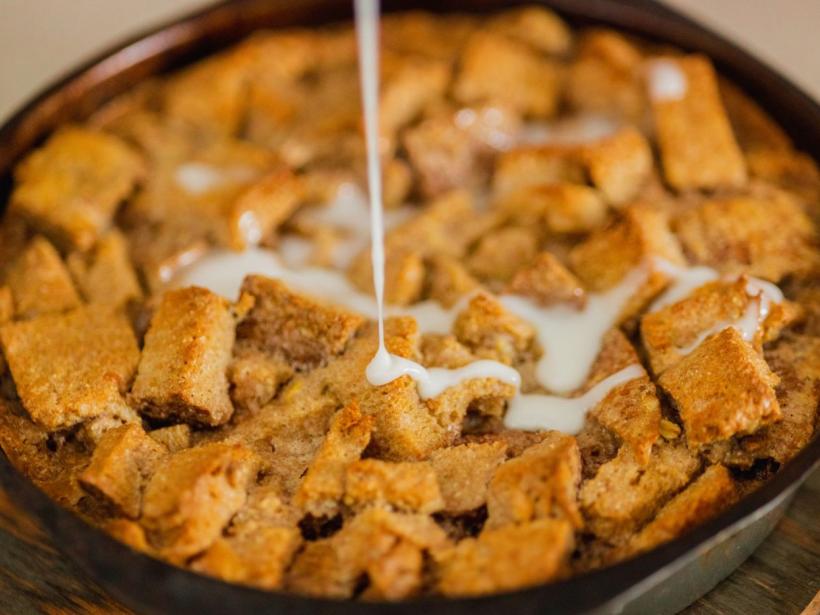
What bread works best for New Orleans bread pudding?
Day-old French bread is the traditional choice for New Orleans bread pudding. The slightly stale, airy crumb soaks up the custard evenly without collapsing into a soggy paste. Brioche works beautifully too, giving you a richer, more buttery result because of its high egg and butter content.
Avoid soft pre-sliced sandwich bread. Its fine texture and high moisture content turn gummy the moment it hits the custard. What you want is a bread that feels dry and almost crisp on the outside, with an open, irregular hole structure inside. That is what traps the liquid while keeping distinct layers in the finished pudding.
If your French bread is fresh, slice it into 1-inch cubes and spread them on a baking sheet. Leave them out overnight or toast them in a 300°F (150°C) oven for 10 minutes. The goal is to drive off enough moisture so the bread acts like a sponge, pulling in the custard base rather than dissolving in it.
How do you make the custard base?

A classic New Orleans bread pudding custard starts with eggs, whole milk, heavy cream, sugar, vanilla, cinnamon and nutmeg. Whisk the eggs and sugar together first until the mixture lightens in color and the sugar dissolves. Then stream in the dairy while whisking so the eggs temper evenly without scrambling. Add the vanilla and spices last, stirring just until everything smells fragrant and combined.
The custard ratio matters more than the exact spice blend. For a standard 9-by-13-inch baking dish, use 4 large eggs, 2 cups (480 ml) whole milk and1 cup (240 ml) heavy cream. The milk keeps the texture soft and sliceable, while the cream adds the velvety richness that makes the pudding feel like a dessert from a French Quarter restaurant. Skimp on either and the bread soaks up liquid unevenly, leaving dry pockets in the finished dish.
Whole milk and heavy cream work together because they bring different amounts of fat and water to the bread. The water in the milk hydrates the stale bread cubes fully, while the fat from the cream coats each piece and slows down how fast the custard sets in the oven. This gives you a pudding with a tender interior and a lightly crisped top, never a dense, eggy block.
What substitutions work for the whiskey sauce?

The classic whiskey sauce is a buttery, sweet pour-over that defines the dessert. You can swap in three solid alternatives that keep the dish rich. Bourbon is the closest stand-in. Many New Orleans cooks actually prefer it for its deeper vanilla and caramel notes. A non-alcoholic butter-vanilla sauce skips the spirit entirely while keeping the velvety texture. A simple caramel sauce brings a darker, toasted sugar flavor that still pairs beautifully with the custard-soaked bread.
Each substitution shifts the character of the finished dish in a small but noticeable way. Bourbon makes the sauce rounder and slightly sweeter, which works especially well if your bread pudding already has raisins or chocolate chips. The butter-vanilla version lets the egg custard and cinnamon take center stage. It is a smart choice when serving kids or guests who avoid alcohol. Caramel sauce introduces a pleasant bitter edge that cuts through the sweetness. It tastes great with a scoop of cold vanilla ice cream.
- Use bourbon instead of whiskey for a smoother, more vanilla-forward sauce.
- Simmer butter, heavy cream, sugar, and a generous splash of vanilla extract for an alcohol-free butter-vanilla sauce.
- Swap in a simple caramel sauce made from sugar and cream for a deeper, toasted flavor.
- Expect bourbon to make the sauce sweeter, butter-vanilla to highlight the custard, and caramel to add a pleasant bitter note.
- Match your sauce choice to your add-ins: bourbon with raisins or chocolate, caramel with pecans or bananas.
How long does bread pudding need to soak before baking?

Give the custard-soaked bread a minimum of 30 minutes at room temperature before it goes into the oven. That half hour lets the stale bread absorb enough liquid to soften and bind, so the pudding holds together when sliced.
An hour is the sweet spot. After 60 minutes the cubes fully hydrate and the center of each piece turns tender without disintegrating. The baked result has a silky, almost custardy interior and a lightly crisped top. If you leave it longer than two hours on the counter, the bread can break down too far and the pudding bakes up dense rather than fluffy.
Overnight soaking in the refrigerator works beautifully. Assemble the dish, cover it tightly and chill for up to 12 hours. The cold slows absorption, so the bread hydrates evenly without turning to mush. Pull the dish out while the oven preheats and add about five minutes to the baking time to offset the chill.
Can you make bread pudding ahead of time?
Yes, bread pudding works beautifully as a make-ahead dessert. Assemble the whole dish the night before, cover it tightly with foil and refrigerate it unbaked for up to 24 hours. The long soak deepens the custard flavor and gives the bread a silky, uniform texture. That texture is hard to achieve when you bake right away.
When you take the dish out of the fridge, let it sit on the counter while the oven preheats to 350°F (175°C). Bake it straight from cold and add 10 to 15 minutes to the usual baking time. The center should be puffed and set, with no liquid pooling when you press it gently.
To reheat a fully baked and cooled pudding, warm individual portions in a 300°F (150°C) oven for 12 to 15 minutes. Place a small dish of water on the rack below to add steam and keep the pudding moist. Avoid the microwave when you can. It tends to turn the edges rubbery. A splash of warm whiskey sauce poured over the top brings back the just-baked richness.
Frequently asked questions
Why is my bread pudding soggy in the middle?
Soggy bread pudding usually means the bread was too fresh or the custard did not soak long enough. Use day-old bread that feels dry to the touch and let it sit in the custard for at least 30 minutes before baking.
Can I use a different alcohol in the sauce?
Yes. Bourbon is the closest substitute and keeps the warm, caramel notes. Dark rum gives a slightly sweeter finish. For a non-alcoholic version, skip the spirit and add an extra teaspoon of vanilla extract.
What is the best way to reheat leftover bread pudding?
Cover individual portions with foil and warm them in a 300°F oven for 10 to 12 minutes. Add a splash of milk or cream on top before reheating to keep the custard moist. A microwave works in a pinch but can make the edges rubbery.
Photo: Mac Mullins, Pexels (Pexels License)