
What is a New Orleans beignet
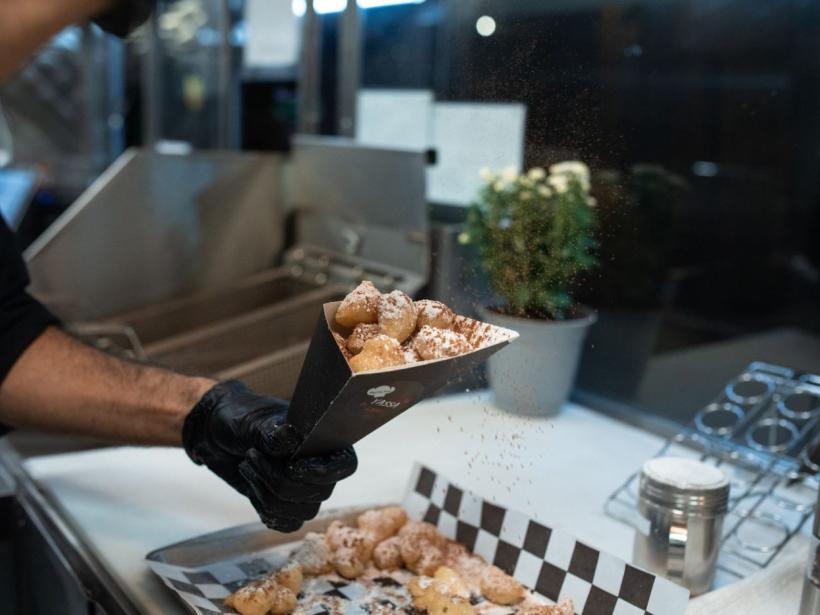
A New Orleans beignet is a square of yeasted dough fried until puffy and deep golden, then buried under a thick layer of icing sugar. It is not a doughnut. A classic doughnut has a ring shape and a denser crumb, while a beignet is a pillow with a thin, crisp shell and a mostly hollow, airy centre. The dough contains eggs and evaporated milk, which gives it a richer taste and a softer texture than a plain yeast dough.
When you bite into one, the steam escapes and the sugar clings to your fingers. The shape matters. The traditional cut is a square or a rectangle, about 6 cm across, and the dough puffs dramatically in the hot oil. That puff creates the large air pockets that make beignets so light. You eat them right away, while they are still warm enough to melt the sugar a little.
What ingredients do I need for beignets
You need a handful of basic baking ingredients for the dough, plus oil for frying and a generous amount of icing sugar for dusting. The recipe relies on yeast for a light texture, so make sure your yeast is fresh and active before you start.
- Bread flour: 500 g (about 4 cups). Bread flour gives the beignets more structure than all-purpose flour. If you only have all-purpose flour, it works, but the beignets will be slightly less chewy.
- Warm water: 180 ml (¾ cup), heated to about 43 °C. The water activates the yeast. It should feel warm to the wrist, not hot.
- Active dry yeast: 2¼ teaspoons (one standard 7 g packet). You can substitute instant yeast in the same quantity. Skip the proofing step and mix instant yeast straight into the dry ingredients.
- Eggs, butter, sugar and salt: 2 large eggs, 60 g of softened unsalted butter, 50 g of granulated sugar and ½ teaspoon of fine salt round out the dough.
- Frying oil and topping: About 1½ litres of a neutral oil with a high smoke point, such as vegetable or peanut oil. For the classic finish you need 150 g to 200 g of icing sugar for a thick, snowy dusting.
Evaporated milk is a traditional addition in some New Orleans recipes. If you want a slightly richer dough, replace half the warm water with 90 ml of evaporated milk and reduce the sugar by a tablespoon to keep the sweetness balanced.
How do I make the beignet dough step by step
Start by warming 180 ml of whole milk until it feels just warm to the touch, around 43°C. Pour it into a large bowl, stir in 2 tablespoons of caster sugar and 7 g of active dry yeast, then leave it alone for 5 to 10 minutes. You are looking for a foamy, creamy cap on the surface. If nothing happens, the yeast is likely dead and you need a fresh packet.
Once the yeast is alive, whisk in 1 large egg, 55 g of melted unsalted butter and 1 teaspoon of vanilla extract. Add 420 g of plain flour and ½ teaspoon of fine sea salt, then mix with a wooden spoon until a shaggy dough forms. Turn it out onto a lightly floured surface and knead by hand for 6 to 8 minutes. The dough should become smooth and elastic, losing its stickiness without tearing apart. If it feels too wet, dust in a little more flour a tablespoon at a time.
Shape the dough into a ball, place it in a clean, oiled bowl and cover tightly with cling film. Let it rise in a warm, draught-free spot until it doubles in size, which usually takes about 90 minutes. Punch the dough down gently, turn it onto a floured worktop and roll it into a rectangle roughly 6 mm thick. Cut the rectangle into 5 cm squares with a sharp knife or a pizza cutter, keeping the pieces covered with a tea towel so they do not dry out while the oil heats.
How do I fry beignets so they puff up properly
Heat a neutral oil with a high smoke point, such as vegetable or canola oil, in a heavy pot to 190°C. A deep, heavy pot holds heat steady and stops the temperature from dropping too much when you add the dough. Use a clip-on thermometer and keep the oil between 185°C and 190°C the whole time you fry.
Fry only three or four squares at a time. Crowding the pot cools the oil quickly and the beignets will soak up grease instead of puffing. Slide each piece of dough gently into the hot oil away from you. The dough should sink for a second, then rise to the surface within about ten seconds. If it stays on the bottom, the oil is not hot enough.
Fry for roughly one minute on the first side, then flip with a slotted spoon or tongs and fry the second side for another minute. The beignets are ready when both sides are deep golden brown and the pillow has puffed up noticeably in the middle. A properly puffed beignet feels light on the spoon and the sizzling sound quietens a little as the moisture cooks off. Lift them out, hold them over the pot for a few seconds to let excess oil drip back, then move them straight to a rack set over paper towels.
What is the best way to dust beignets with icing sugar
Dust the beignets while they are still hot, straight from the fryer. The heat melts the first layer of sugar just enough to form a light, sticky glaze that holds the rest in place.
Pile a generous amount of icing sugar into a fine-mesh sieve and shake it over the beignets from a height of about 20 centimetres. A heavy, even snowfall works better than a timid sprinkle. Let the first layer settle for half a minute, then add a second round. The double dusting gives you the classic New Orleans look: a thick white coat that stays put without turning into a wet paste.
Never stack hot beignets before dusting and never cover them with a cloth afterwards. Steam is the enemy here. It will dissolve the sugar into a sticky mess. Serve the beignets immediately on a plate with extra icing sugar on the side so people can add more as they eat.
Can I make the dough ahead of time
Yes, you can refrigerate the beignet dough overnight and fry it the next day. This improves the flavour because the slow, cold fermentation gives the yeast more time to develop a slightly tangy, complex taste. Prepare the dough exactly as the recipe directs, through the first rise at room temperature.
After the dough has doubled in size, punch it down to release the gas, then wrap the bowl tightly with cling film. Place it in the fridge for up to 24 hours. The dough will continue to rise slowly, so use a bowl that is at least twice the volume of the dough.
The next day, take the bowl out of the fridge and let the dough sit on the counter for 30 to 40 minutes to lose its chill. Cold dough is stiff and will not puff as dramatically in the hot oil. Once it feels soft and pliable again, roll it out, cut the squares and fry them straight away. Do not re-roll the scraps more than once, or the last batch will be dense.
- Punch down the risen dough before refrigerating it.
- Use a bowl with plenty of headroom for a slow overnight rise.
- Let the chilled dough warm up for at least half an hour before rolling.
- Fry the beignets immediately after cutting them.
- Keep the oil temperature steady at 180°C for a uniform puff.
Frequently asked questions
Why did my beignets turn out flat and dense
Flat beignets usually mean the yeast was old or the oil was not hot enough. Check that your yeast foams within 5 to 10 minutes in warm liquid and keep the oil steady at 180°C. Dough that was rolled too thin or handled roughly after rising can also lose its puff.
Can I bake beignets instead of frying them
Baking will give you a soft roll, not a classic beignet. The dough needs a quick dip in hot oil to create the signature puffy shell and tender crumb. If you want to avoid deep frying, this recipe will not give the same texture in the oven.
How do I store leftover beignets
Beignets are best eaten within an hour of frying. If you have leftovers, keep them uncovered at room temperature so the crust stays crisp and reheat them in a hot oven for a few minutes. Avoid sealing them in a container while they are still warm, or they will steam and turn soggy.
Photo: RDNE Stock project, Pexels (Pexels License)