
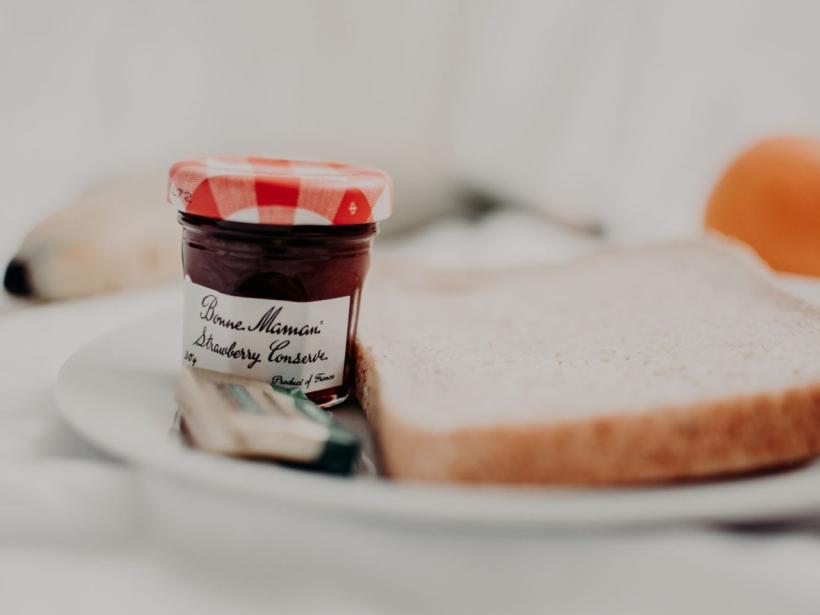
What is the difference between confiture, jam, and jelly?
A confiture is a preserve where whole or large pieces of fruit are suspended in a clear, softly gelled syrup. The fruit keeps its shape and the syrup is thick enough to cling to a spoon but never stiff. Jam, by contrast, is made from crushed or chopped fruit cooked with sugar until the mixture loses its definition and becomes a uniform, spoonable spread. Jelly uses only fruit juice, strained clear of all solids, and sets to a firm, quivering consistency that holds its shape when cut.
The differences are in the fruit preparation, the sugar-to-fruit ratio, and the final texture.
- Fruit texture: confiture contains intact or large-cut fruit pieces; jam is a homogeneous soft mass; jelly contains no fruit solids at all.
- Sugar content: confiture typically uses a higher proportion of sugar than jam, which helps the fruit hold its shape and creates a glossy syrup. Jelly often has the most sugar by weight because it relies on sugar to form a strong gel with pectin.
- Set and consistency: confiture has a loose, syrupy set that pours slowly; jam is soft and spoonable; jelly is firm enough to retain a clean edge when sliced.
- Pectin role: confiture relies on natural fruit pectin for a gentle set. Jam may include added pectin for body. Jelly almost always needs added pectin to achieve its solid structure.
How do you make a basic berry confiture at home?

Start with 2 lb (900 g) of fresh or frozen berries, 1 3/4 cups (350 g) of granulated sugar, and the juice of one lemon. Rinse and hull the berries, then toss them with the sugar and lemon juice in a heavy-bottomed pot. Let the mixture sit at room temperature for one hour. This maceration time draws out the fruit's natural juices and dissolves the sugar, so the berries will not scorch when you apply heat.
Place the pot over medium heat and bring the fruit to a gentle boil, stirring often with a wooden spoon. Reduce the heat to maintain a steady simmer and cook for 25 to 35 minutes. Skim off any pale foam that rises to the surface; leaving it in will make the confiture cloudy. To check the setting point, spoon a small amount onto a chilled plate and let it cool for 30 seconds. Run your finger through it: the confiture is ready when the trail holds its shape and the surface wrinkles slightly when pushed.
What are the best fruits for making confiture?
Fruits naturally high in pectin give confiture its signature soft gel without relying on large amounts of added thickener. Apples, especially tart green varieties like Granny Smith, quince, and citrus peels and seeds are the workhorses here. Currants, cranberries, and plums also set beautifully on their own, producing a clear, spoonable texture that holds whole fruit pieces in suspension.
Lower-pectin fruits need a helping hand to reach the right consistency. Ripe strawberries, cherries, peaches, and figs will stay loose and syrupy unless you add lemon juice or a small amount of commercial pectin. A good rule of thumb is to pair one low-pectin fruit with a high-pectin companion, think strawberry and red currant, or peach and green apple, to keep the fruit flavor forward while building structure.
- Quince: the classic choice, loaded with pectin and prized for its floral aroma and rosy color after long cooking.
- Tart apples (Granny Smith, Bramley): provide a neutral backbone that lets other fruits shine while delivering a reliable set.
- Black currants and red currants: small berries with big gelling power and a sharp, clean taste that balances sweetness.
- Cranberries: naturally high in pectin and acid, they cook down into a vibrant confiture with a firm, glossy texture.
- Plums and damsons: their skins hold plenty of pectin, giving the confiture a deep color and a soft but distinct gel.
- Citrus fruit (Seville oranges, lemons): the pith and seeds are pectin-rich; marmalade-style confiture depends on them entirely.
How do you serve confiture with a cheese board?

Confiture works well on a cheese board because its glossy, fruit-forward character cuts through richness and salt. Spoon a few tablespoons into a small ramekin or shallow bowl and place it directly on the board, not on the cheese itself. Guests can drag a slice of cheese through the confiture or spoon a little onto a cracker alongside it.
Pair by matching intensity. A deeply sweet, dark fig confiture stands up to the bold, funky notes of blue cheese. Tart sour cherry confiture works beautifully with fresh, tangy goat cheese, while apricot or peach confiture bridges the gap between nutty aged Gouda and creamy Brie. For a larger board, offer two contrasting confitures, one darker and one brighter, to give everyone a clear choice.
Can you use confiture in baking and breakfast dishes?

Confiture slips into baking and breakfast with less fuss than jam, because the fruit pieces are already suspended in a smooth, spreadable gel. You do not need to chop or crush anything first. The higher pectin content also means it holds its shape during baking instead of dissolving into a watery puddle.
For muffins and quick breads, drop a teaspoon of confiture onto the batter in each liner before baking. It sinks slightly and forms a soft fruit pocket in the crumb. When layering a sponge cake, spread confiture between the tiers instead of buttercream for a sharper fruit note. Warm it gently with a splash of water first so it brushes on without tearing the cake.
At breakfast, spoon it generously over pancakes, waffles, or a bowl of plain yogurt. Stirring a ribbon of confiture through oatmeal or overnight oats gives you distinct fruit bites, not just a uniform sweetness. A thin layer inside a croissant before warming turns a plain pastry into something close to a bakery fruit danish.
How should you store homemade confiture?
Pour the hot confiture into sterilized glass jars, leaving a quarter inch of headspace at the top. Wipe the rims clean with a damp cloth so the lids seal properly, then screw the bands on fingertip tight. For shelf storage, process the filled jars in a boiling water bath for ten minutes, adjusting the time upward if you live at high altitude. Once the jars cool, you will hear the lids pop as they seal. Any jar that does not seal should go straight into the fridge and be used within three weeks.
An unopened, properly sealed jar keeps in a cool pantry for up to a year. After opening, store the jar in the refrigerator with the lid on tight. The high sugar content acts as a natural preservative, but finish an open jar within a month. Always use a clean, dry spoon to scoop out what you need. If you see any mold, off smells, or fermentation bubbles, discard the entire jar.
Frequently asked questions
Is confiture just the French word for jam?
Not exactly. While the word translates to jam, a confiture is made with whole or large pieces of fruit and has a softer, clearer jelly. Standard jam is often cooked down to a thicker, more uniform spread with smaller fruit pieces.
Can I make confiture without added pectin?
Yes. Many fruits, such as apples, quince, and red currants, contain enough natural pectin to set on their own. For low-pectin fruits like strawberries or peaches, a splash of lemon juice or a small amount of commercial pectin helps achieve the right consistency.
What is the best way to serve confiture at a party?
Place a small bowl of confiture on a cheese board with a dedicated spoon so guests can drizzle it over soft cheeses. For a dessert table, warm it slightly and pour it over a block of cream cheese or a baked brie, then serve with crackers or sliced baguette.
How long does homemade confiture last?
When properly sealed in sterilized jars using a water-bath canning method, it keeps for up to one year in a cool, dark pantry. Once opened, store it in the refrigerator and use it within three to four weeks.
Photo: Lisa Fotios, Pexels (Pexels License)