
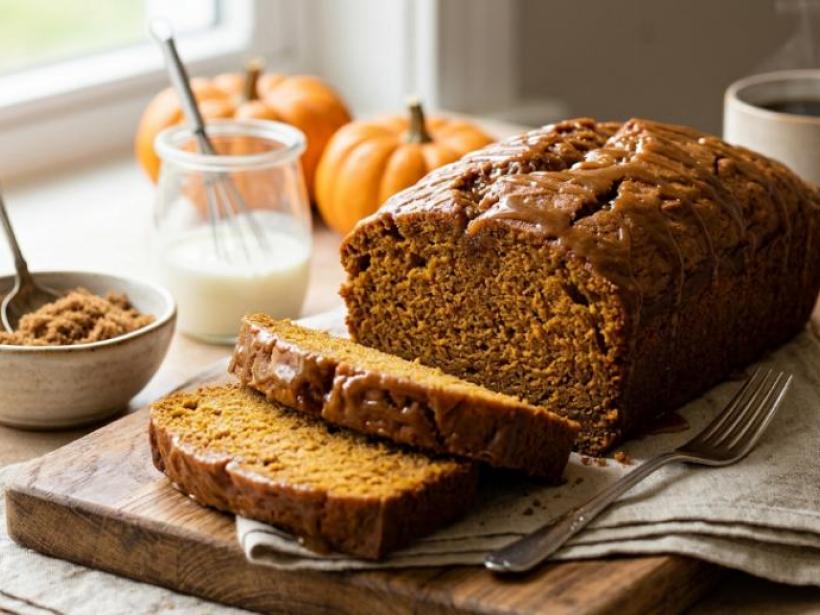

Plenty of pumpkin loaf recipes use only granulated sugar, and the result works fine, but it skips a flavor upgrade that costs nothing extra. Swapping part of the sugar for brown sugar adds a caramel note that plain white sugar can't reach, and a small splash of buttermilk adds tenderness on top of what the pumpkin and oil already provide. This pumpkin loaf recipe moist enough to eat straight from the counter leans on both of those tricks, plus a batter-resting step most recipes skip entirely.
None of this makes the process harder. The extra steps take under five minutes combined, and the payoff is a loaf that tastes a little more complex than the standard version while staying just as easy to pull together on a weeknight.
Active Time: 20 minutes
Total Time: 1 hour 40 minutes
Servings: 10
Ingredients
The list stays close to a standard pumpkin loaf, with two additions that make the biggest difference in flavor and texture: brown sugar and a splash of buttermilk.
- 1¾ cups (220g) all-purpose flour, 1 tsp baking soda, ½ tsp baking powder, ½ tsp salt, 2 tsp pumpkin pie spice
- 1 cup (200g) packed light brown sugar, ½ cup (100g) granulated sugar, 1½ cups (375g) pumpkin puree
- ½ cup (120ml) vegetable oil, ¼ cup (60ml) buttermilk, 2 large eggs, 1 tsp vanilla extract
Buttermilk brings acidity and a small amount of extra liquid, both of which soften the crumb without making the batter runny. Regular milk with a teaspoon of lemon juice or white vinegar stirred in works as a substitute if buttermilk isn't on hand; letting that mixture sit for five minutes before use gives it time to curdle slightly and mimic real buttermilk's effect. All granulated sugar works too in place of the brown sugar, though the flavor turns flatter and the crumb loses a small amount of moisture that the molasses in brown sugar provides.
Instructions
Preparation
Preheat the oven to 350°F and grease a 9x5-inch loaf pan, lining the bottom with a strip of parchment paper for easier removal later. Whisk the flour, baking soda, baking powder, salt, and pumpkin pie spice together in one bowl. In a second bowl, whisk the brown sugar, granulated sugar, pumpkin puree, oil, buttermilk, eggs, and vanilla until the mixture turns smooth and streak-free. Fold the dry ingredients into the wet ingredients and stir only until no dry flour remains visible, then let the batter rest in the bowl for 10 minutes before pouring it into the pan. That short rest gives the flour time to fully hydrate, which helps prevent a gummy center later.
Cooking
Pour the rested batter into the prepared pan and smooth the top with a spatula. Bake for 55 to 65 minutes, tenting the pan loosely with foil around the 40-minute mark if the top has already turned deep brown. Check for doneness with a toothpick inserted into the thickest part of the loaf; it should come out with a few moist crumbs clinging to it, not wet batter. The loaf's internal temperature should sit close to 200°F at the center when it's fully baked, which is a more reliable check than color alone.
Serving
Cool the loaf in the pan for 10 minutes, then lift it out using the parchment paper and set it on a wire rack. Wrapping the still-warm loaf loosely in foil for the next 20 minutes traps steam against the crust, which keeps the exterior from drying out while the inside finishes setting. Slice once the loaf reaches room temperature, and serve it plain or with a thin brown sugar glaze drizzled across the top.
Nutritional Value Per One Serving
These numbers apply to one slice from a loaf cut into 10 even servings, calculated from the ingredient list above. Brand differences in pumpkin puree and buttermilk fat content shift the totals slightly, so this is a solid estimate rather than a certified lab figure.
Nutrition Facts, one serving:
- Calories: 260
- Total Fat: 9g
- Saturated Fat: 1.5g
- Cholesterol: 35mg
- Sodium: 200mg
- Total Carbohydrates: 42g
- Dietary Fiber: 1g
- Sugars: 27g
- Protein: 3g
Tips and Variations
Once the base recipe feels familiar, small adjustments let bakers at any level shape the loaf around their own taste or schedule.
Poking a few small holes across the top of a warm loaf with a skewer lets a thin glaze soak slightly into the crumb instead of sitting only on the surface. A simple glaze of brown sugar, butter, and milk, warmed briefly and poured over the loaf while it's still warm, adds sweetness without turning the loaf into a frosted cake. This step stays optional, and the loaf tastes complete without it.
Chopped pecans or walnuts fold into the batter for crunch and hold their texture well through baking. Chocolate chips work too, especially with a dusting of flour first to keep them suspended in the batter rather than sinking. Dried cranberries add a tart contrast against the sweetness of the brown sugar.
- ½ cup chopped pecans or walnuts, folded in just before baking
- ½ cup chocolate chips, tossed in a teaspoon of flour first
- ⅓ cup dried cranberries, for a tart contrast
A crack down the center of the loaf usually means the oven ran a little hot or the outside baked slightly too fast before the middle set; many bakers treat it as a normal feature of a quick bread rather than a mistake. Dividing the batter across mini loaf pans works well for gifting, cutting the bake time to roughly 30 to 35 minutes per pan, though it's worth checking a few minutes earlier since smaller pans finish faster.
Stored properly, this loaf holds its texture for about 4 days at room temperature and up to a week refrigerated. Wrapping it tightly in plastic, rather than leaving it loosely covered, makes the biggest difference in how long it stays soft. For longer storage, wrap the cooled loaf tightly in plastic and then foil and freeze it for up to 3 months, thawing it overnight at room temperature still wrapped.
Buttermilk shows up again in a few other bakes worth trying, including this buttermilk scones recipe, which uses the same tenderizing trick in a different shape. Anyone who wants more ways to put a can of pumpkin to use can also try this baked pumpkin casserole, a savory-leaning route that skips the loaf pan entirely. For a different quick-bread texture built the same one-bowl way, this blueberry sour cream coffee cake makes a good side-by-side bake. The full dessert collection covers more fall bakes beyond pumpkin, for anyone planning a bigger spread.
Conclusion
A moist pumpkin loaf recipe doesn't need a long ingredient list to earn a spot in a fall baking rotation. Brown sugar, a splash of buttermilk, and a short rest before baking add real depth without adding real difficulty. Once those small habits become routine, this loaf turns into the version worth making on repeat, not just the one that happened to work out once.