
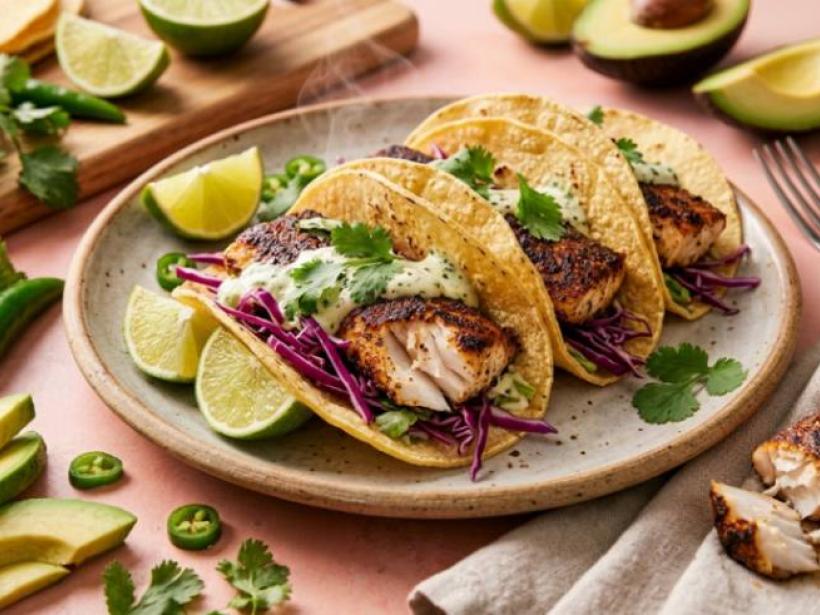

My neighbor grills mahi mahi every summer, and he swears the fish falls apart if you flip it too soon. He's right about that, and it's probably why his tacos come out better than mine used to. Mahi mahi is dense enough to survive a hot pan without falling apart, but it still punishes a heavy hand.
This is a recipe for fish tacos with mahi mahi, and it gives you two ways to cook the fish: sear it in a skillet for a blackened crust, or broil it if you'd rather not stand over a stove. Either way, you're looking at about 30 minutes from start to finish, most of it hands-off.
Active Time: 15 minutes. Total Time: 30 minutes. Servings: 4.
Ingredients
- 1 lb mahi mahi fillets
- 2 tbsp olive oil
- 2 tsp blackening seasoning (paprika, cayenne, garlic powder, onion powder, oregano, thyme)
- 8 small corn or flour tortillas
- 2 cups shredded cabbage
- 1/2 cup sour cream or Greek yogurt
- 1 lime, juiced
- 1/4 cup chopped cilantro
- Salt and pepper, to taste
Corn tortillas hold up to sauce without going soggy; flour tortillas bend more easily and taste milder. Use whichever you've got in the cupboard.
Instructions
Preparation
Pat the fillets dry before you season them. Wet fish steams instead of searing, and that's how you lose the crust that makes blackened mahi mahi worth the effort. Rub the fillets with olive oil first, then press the seasoning in by hand instead of just sprinkling it on. Give them 10 minutes to sit so the spice has time to work into the flesh.
While the fish rests, mix the sour cream with half the lime juice and a small pinch of salt, and set it aside. Toss the cabbage with the rest of the lime juice and the cilantro, but don't overwork it. Slaw goes limp fast if you handle it too much.
Cooking
If you're using a skillet, wait until it's properly hot, medium-high with a faint shimmer on the oil, before the fish goes in. Cook the fillets 3 to 4 minutes per side, and look for a crust that's turned matte and dark rather than shiny.
Broiling is the more forgiving option, and it's the reason most mahi mahi fish recipes lean on it when the goal is fewer things to watch. Set the seasoned fillets under a high broiler for 4 to 5 minutes per side, checking around the 4-minute mark since broilers run hotter or cooler depending on the oven. An extra minute can dry the fish out fast.
Once cooked, let the fish rest for 2 minutes before flaking it with a fork. Skip that step and you'll end up with mush instead of clean flakes.
Serving
Warm the tortillas over a flame or in a dry pan for a few seconds a side. Layer in the flaked fish, then the slaw, then a spoonful of lime cream. Hold off on extra toppings until you've tasted it plain, since most fish tacos get overdressed before anyone's checked whether the fish is seasoned right in the first place.
Nutrition Facts, One Serving
|
Nutrient |
Amount |
|
Calories |
320 |
|
Total Fat |
14g |
|
Saturated Fat |
4g |
|
Cholesterol |
85mg |
|
Sodium |
410mg |
|
Total Carbohydrates |
28g |
|
Dietary Fiber |
4g |
|
Sugars |
3g |
|
Protein |
24g |
Tips and Variations
Lettuce wraps work well if you're cutting carbs, though they change the texture more than you'd expect. A few other swaps worth trying:
- Pickled red onions instead of plain slaw, for sharper acidity
- Mango salsa in place of cabbage, for a sweeter, softer bite
- Avocado crema instead of sour cream, thinner and greener in flavor
A Few Honest Notes
Blackened and broiled mahi mahi don't just cook differently, they taste different too. The skillet version picks up more char and a slight bitterness at the edges, which some people love and others scrape off. The broiler gives you a gentler, more even flavor with less crust to speak of. Neither one wins outright. It comes down to whether you want the smoke from the pan or the ease of the oven on a given night.
Hungry for the spotlight course? Take a look at our main dish recipes – hearty, flavorful, and built to steal the show at any table.