
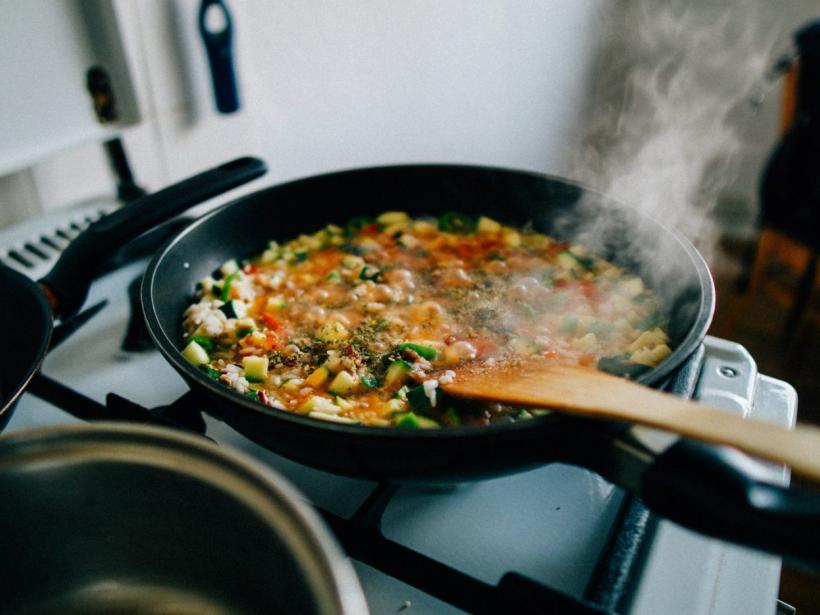
What is the difference between Creole and Cajun jambalaya?
Creole jambalaya contains tomatoes and Cajun jambalaya does not. That one ingredient decides the colour, the acidity and the final texture, so pick your style before you shop.
Both versions start with the same base: onion, celery and green bell pepper, what New Orleans cooks call the trinity, plus long-grain rice and stock. Creole cooks in the city add canned tomatoes or tomato paste and often finish with shrimp. Cajun cooks in the countryside brown the meat first, then build a darker, smokier pot with no tomato at all.
- Creole: tomatoes go in early, the rice turns reddish, the flavour is brighter.
- Cajun: meat browns hard in the pot, the rice stays amber, the flavour is deeper.
- Both: trinity, long-grain rice, stock, andouille sausage and a pinch of cayenne.
- Choose Creole if you like a lighter, tangier pot with seafood.
- Choose Cajun if you want a richer pot built on browned pork or chicken.
What do you need to make jambalaya?

For six servings you need one heavy 5-6 quart Dutch oven or cast-iron pot with a tight lid, and it does most of the work. A thin pot scorches the trinity before the rice goes in, so weight matters more than the brand.
The base is the trinity: 1 large onion, 1 green bell pepper and 2 celery stalks, all diced to about 1 cup each. Add 2 tbsp minced garlic, 12 oz smoked sausage sliced into rounds, 1 lb boneless chicken thighs cut into 1-inch pieces, 2 cups long-grain rice, 3 cups stock and 1 can (14.5 oz) diced tomatoes for Creole style.
- 1 batch of the spice blend from the next section (about 3 tbsp total)
- 2 tbsp cooking oil or bacon fat for browning
- 1 lb smoked sausage and 1 lb chicken thighs, or 2 lb of either
- 2 cups long-grain rice, rinsed until the water runs clear
- 3 cups chicken stock, plus 1 can (14.5 oz) diced tomatoes if you want Creole style
- 1 bunch scallions and 2 tbsp chopped parsley for finishing
Keep the stock hot in a separate saucepan before you start. Cold stock slows the pot and stretches the cook time; hot stock keeps the rice cooking evenly from the first minute.
How do you make the jambalaya spice blend?
A Creole spice blend for jambalaya combines smoked paprika, cayenne, garlic powder, onion powder, dried thyme, dried oregano, salt and black pepper. Mix the spices in a small bowl before the pot goes on the heat so the seasoning is even and you never dump raw cayenne into one spot.
For one pot serving 6, measure 2 tbsp smoked paprika, 1 tsp cayenne, 1 tbsp garlic powder, 1 tbsp onion powder, 1 tsp dried thyme, 1 tsp dried oregano, 1 tbsp kosher salt and 1 tsp black pepper. Stir until the colour is even, then taste a pinch to check the balance.
- Start with half the cayenne if you are unsure about heat, then add the rest with the liquid.
- Add salt in two stages, once with the vegetables and once after the rice absorbs the stock.
- Crush the dried thyme and oregano between your fingers so they release flavour in the pot.
- Keep a jar of the blend on hand and use 2 tbsp per batch of jambalaya.
How do you cook jambalaya step by step?

Brown the meat first in a heavy Dutch oven over medium-high heat, then build the dish in layers so the rice absorbs flavour instead of turning to mush. Work in this order: meat, trinity, spices, rice, stock, lid.
- Brown 1 lb (450 g) sliced andouille and 1 lb (450 g) cubed chicken thigh in 1 tbsp oil over medium-high heat, about 6-8 minutes, then set aside.
- Soften the trinity (1 onion, 1 green bell pepper, 2 celery stalks, all diced) in the same pot for 5-6 minutes, scraping up the browned bits.
- Stir in 3 cloves minced garlic and 2 tbsp spice blend and cook for 1 minute until fragrant.
- Add 2 cups (400 g) long-grain rice and toast for 2 minutes, stirring so every grain is coated.
- Pour in 3 cups (720 ml) stock at a 1.5 to 1 ratio, return the meat, bring to a boil, then cover and simmer on low for 25-30 minutes.
- Pull the pot off the heat and rest it covered for 10 minutes before fluffing with a fork.
Keep the lid on while the rice steams. Lifting it lets the steam escape and leaves the centre underdone.
Why does jambalaya rice turn out sticky or undercooked?

Most jambalaya rice problems come from one of five causes: the wrong rice, too much liquid, too much stirring, a lid lifted too often or heat that is too high. Fix the cause and you get separate, tender grains every time.
Long-grain rice is the only rice that works here. Short-grain and arborio release starch and turn gluey, so check the bag before you start. Use a 1 to 1.5 ratio of rice to stock by volume, and let the rice rest undisturbed once the lid goes on. Stir once after adding the rice, then leave it alone. Lift the lid only to check at the end, and keep the pot at a bare simmer rather than a rolling boil.
- Wrong rice: use long-grain only, and rinse it until the water runs clear.
- Too much liquid: measure 1 part rice to 1.5 parts stock, and add stock hot.
- Too much stirring: stir once, then leave the rice to steam undisturbed.
- Lid lifted too often: keep it on for 20-25 minutes, then check.
- Heat too high: keep a bare simmer, and move the pot to a cool burner if it scorches.
How do you store and reheat leftover jambalaya?
Cool jambalaya within two hours of cooking, then refrigerate it in a shallow container with the lid slightly ajar until the steam dies down. Once cool, seal the lid and keep it for up to four days.
Reheat single portions in a covered pan over medium-low heat with a splash of stock or water, about 2 tbsp per cup of rice, stirring now and then for 5-7 minutes. The rice absorbs the liquid and loosens without going mushy. In a microwave, cover the bowl and heat in 30-second bursts, adding the same splash of stock between bursts.
Freeze leftovers in portion bags for up to three months. Thaw overnight in the fridge, then reheat as above.
- Spread the jambalaya in a wide, shallow dish so it cools faster.
- Add stock a little at a time, since wet rice turns gluey.
- Reheat until steaming hot all the way through, never just warm.
- Skip the freezer for jambalaya made with previously frozen shrimp.
- Reheat only the portion you plan to eat and refrigerate the rest.
Frequently asked questions
Can I make jambalaya without a cast-iron pot?
Yes. Any heavy-bottomed pot with a tight lid works, including a Dutch oven or a deep saucepan. A thin pot heats unevenly and tends to scorch the rice at the bottom, so keep the heat low and check early.
What rice works best for jambalaya?
Long-grain white rice gives the separate, fluffy grains the dish is known for. Converted or parboiled rice is more forgiving for beginners. Short-grain and risotto rice turn creamy and sticky, so leave them for other dishes.
Can I make jambalaya ahead of time?
You can brown the meat and cook the vegetables a day ahead and refrigerate them. Cook the rice fresh on the day you serve, because rice absorbs the stock best right after it goes in, and reheated rice softens.
How spicy should the spice blend be?
Start with half the cayenne and taste the blend before it goes in the pot. You can always add heat with hot sauce at the table, but you cannot take it out once the rice has absorbed it.
Photo: Christian Lue, Unsplash (Unsplash License)