
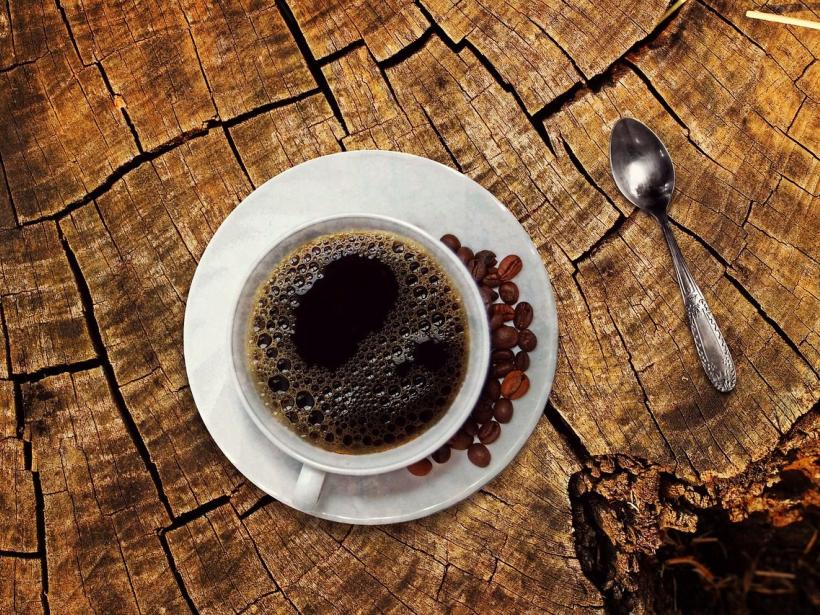
What roast level should you buy?
Roast level changes the flavour more than any other detail on the bag. Light roast keeps the bean's original character, so it tastes bright and often fruity, with noticeable acidity. Medium roast balances that acidity with caramel sweetness from the longer roasting, and it is the safest all-round choice. Dark roast tastes bold, smoky and low in acidity, though much of that flavour comes from the roasting itself rather than the bean.
| Roast | Tastes like | Suits best |
|---|---|---|
| Light | Bright, fruity, tea-like | Pour-over, drip, French press |
| Medium | Balanced, sweet, mild acidity | Drip, espresso, French press |
| Dark | Smoky, bold, bittersweet | Espresso, drip with milk |
Match the roast to your machine and your milk habit. Dark roasts cut through steamed milk in lattes and hold up in espresso machines. Light roasts suit drip makers and French presses, where the longer brewing time brings out their finer flavours. If you drink your coffee black and want an easy starting point, buy a medium roast first and adjust from there.
What grind size does each machine need?

Each brewer needs a different grind because water spends a different amount of time in contact with the coffee. A French press steeps for about four minutes, so it needs coarse grounds that release flavour slowly. An espresso machine pushes water through in 25 to 30 seconds, so it needs a fine grind that resists the pressure.
Match the grind to the machine and the cup comes out balanced. Too fine a grind in a drip maker slows the water and turns the cup bitter. Too coarse a grind in an espresso basket lets water rush through and leaves the shot sour and thin.
- French press and cold brew take a coarse grind, roughly the texture of sea salt.
- Drip coffee makers take a medium grind, close to the feel of table sugar.
- Pour-over cones take a medium-fine grind, finer than drip but short of espresso.
- Espresso machines take a fine grind, like powdered sugar pressed between your fingers.
How do you check the grind before you brew?
Pinch a little coffee between your fingers and rub it. Coarse grind feels like coarse cornmeal with clear, hard particles. Medium grind feels like sand, with a few visible flakes. Fine grind feels like flour and sticks to your fingertips, and espresso grind should clump lightly when you squeeze it.
Run a quick visual test as well. Spread a small pinch on a white plate or napkin. You should see mostly even particles of one size. A mix of large chunks and fine powder means an uneven grind, and that usually leads to bitter, muddy coffee in a French press or a weak, fast pour in a drip machine.
You can run this check in under a minute:
- Rub a pinch between your thumb and forefinger and note the texture.
- Squeeze a small amount; espresso grind should hold its shape briefly.
- Spread a pinch on a white surface and look for even particle sizes.
- Drop a pinch into a glass of water; coarse particles sink fast, fine ones float and cloud the water.
- If the grind feels wrong for your machine, adjust the grinder one notch and repeat the test.
Which coffee works best in a drip coffee maker?

A drip coffee maker wants a medium grind, the texture of coarse sand, and a medium roast that keeps sweetness without turning bitter over a long brew cycle. Medium roasts hold up better than dark ones here because the machine runs hot water through the bed for several minutes.
Use a basket-style paper filter matched to your model. A loose filter lets grounds slip past and clouds the pot, so press it flat against the sides before you add coffee.
- If the pot tastes weak, grind finer by one notch or add a tablespoon more coffee per cup.
- If it tastes harsh or drying, grind coarser and check that the filter is seated.
- Keep the water ratio steady at about 1 tablespoon of coffee per 6 ounces of water.
- Rinse the filter with hot water first to remove paper taste.
Which coffee works best in an espresso machine?
Espresso needs a fine grind, close to powdered sugar, and beans roasted within the past few weeks. The machine pushes hot water through the grounds at roughly 9 bars of pressure, so only a fine, fresh coffee can resist the water long enough to extract properly. A medium roast or a dark roast both work; choose whichever taste you prefer.
A standard double basket holds about 18 grams of grounds, and a good shot of espresso runs 25 to 30 seconds. Watch the flow to judge the grind. If nothing comes out after 10 seconds, the shot is choked, so grind coarser. If the cup fills in under 15 seconds and tastes sour and thin, the shot is gushing, so grind finer. Adjust one step at a time and pull another shot.
Which coffee works best in a French press?

A French press wants a coarse grind, roughly the texture of sea salt, and a medium to dark roast that can stand up to a four-minute steep. The metal mesh filters out grounds but not fine particles, so coffee ground too finely slips through into the cup and leaves it muddy.
Coarse grounds give the water room to move and release flavour slowly. A medium roast keeps sweetness and body without turning bitter over the steep, while a dark roast adds depth if you take your coffee with milk. Avoid very light roasts here, because the long contact time pulls out sharp, grassy notes.
- Grind coarsely, close to sea salt, and adjust one notch coarser if the cup tastes silty.
- Steep for about four minutes, then press the plunger down slowly and steadily.
- Choose a medium or medium-dark roast for balance, or a dark roast for a heavier cup.
- Skip pre-ground coffee labelled for espresso, since it is far too fine for the mesh.
- Pour off any coffee left in the press so it does not keep extracting and turn bitter.
How fresh should the beans be?
Buy beans with a roast date printed on the bag, and aim to use them within two to four weeks of that date. Coffee does not spoil like milk, but the aromas that make a cup taste lively fade steadily after roasting. If a bag shows only a "best before" date and no roast date, you cannot tell how old the coffee really is, so pick a roaster that prints it.
Whole beans hold their flavour far longer than pre-ground coffee, because grinding exposes much more surface area to air. Grind just before brewing whenever you can. Store beans in an airtight container in a dark cupboard, away from light, heat and moisture, and keep them out of the fridge, where condensation and food odours get in.
Frequently asked questions
Can I use the same coffee for every machine?
Yes. You can use the same beans, but the grind has to change. A bag ground for a French press will clog an espresso basket, and espresso grind will over-extract in a drip brewer. Buy whole beans and grind to fit each machine.
Is dark roast stronger than light roast?
No. Dark roast tastes bolder and smokier, but it does not contain more caffeine. Roasting actually reduces bean mass slightly, so a light roast can deliver a touch more caffeine by weight. Choose roast for flavour, not for strength.
How long does ground coffee stay fresh?
Days. Ground coffee loses aroma within days once the bag is open. Whole beans keep for a few weeks past the roast date in an airtight container. If you buy pre-ground, choose the smallest bag you will finish in about two weeks.
Why does my coffee taste sour or bitter?
Under-extraction. Sour, thin coffee usually means under-extraction, often from too coarse a grind or too short a brew. Bitter, harsh coffee points to over-extraction, from too fine a grind or too much time in contact with water. Adjust the grind one step and brew again.
Photo: cocoparisienne, Pixabay (Pixabay Content License)